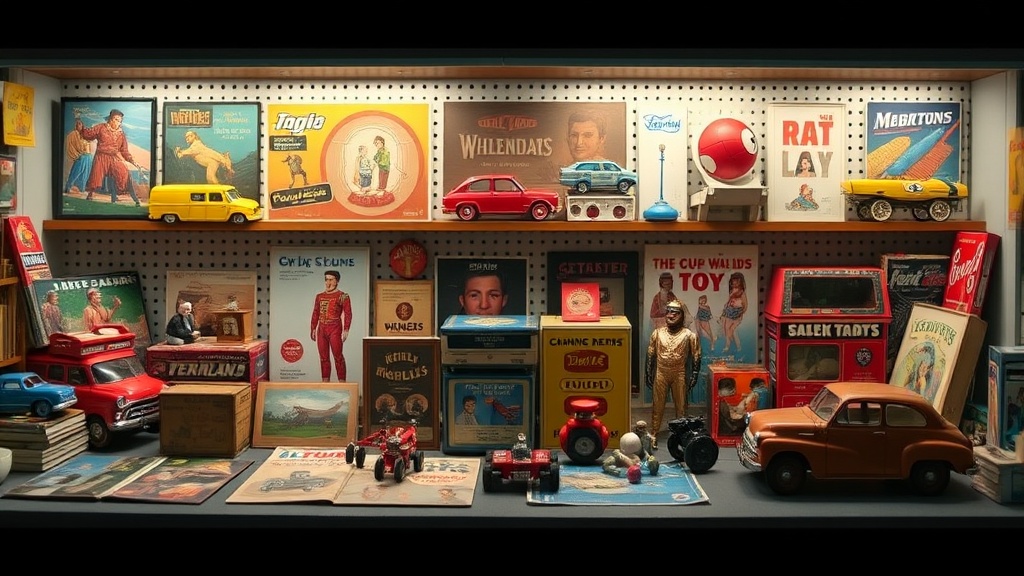
The Ultimate Guide to Collecting Vintage Toy Catalogs

Vintage toy catalogs represent one of the most accessible yet historically significant corners of the collectibles market. This guide covers everything needed to start or expand a collection — from identifying valuable editions and understanding grading standards to proper storage techniques and where to hunt for hidden gems. Whether drawn by nostalgia, investment potential, or the sheer visual appeal of these printed time capsules, readers will find actionable strategies for building a meaningful collection without overpaying or getting burned by reproductions.
What Makes Vintage Toy Catalogs Valuable?
Rarity, condition, and cultural significance drive the market. The most sought-after catalogs come from major retailers and manufacturers during peak toy industry eras — think Sears Wish Books from the 1960s through 1980s, Montgomery Ward Christmas catalogs, and manufacturer-specific publications from companies like Marx, Mattel, and Hasbro.
The 1963 Sears Christmas Book featuring the first G.I. Joe figures can fetch $200–$400 in excellent condition. Earlier editions from the 1940s and 1950s — when toy sections were smaller but post-war optimism drove manufacturing — command premium prices due to simple scarcity. Most families discarded these seasonal publications after the holidays.
Content matters enormously. Catalogs featuring iconic product launches — the 1977 Kenner Star Wars lineup, the 1984 Transformers debut, the 1988 Nintendo Power promotional inserts — carry historical weight beyond their paper stock. Collectors prize documentation of "first appearances" much like comic book enthusiasts chase key issues.
Print quality and binding type affect value too. Glossy full-color pages survive better than newsprint, which yellows and becomes brittle. Spiral-bound dealer catalogs from manufacturers like Remco or Ideal often outlast stapled department store editions. The catch? Those same sturdy dealer catalogs were produced in smaller quantities, making them harder to find today.
How Do You Grade the Condition of Toy Catalogs?
Grading follows a modified version of comic book standards, adapted for periodicals. Professional grading services like CGC now offer certification for vintage catalogs, though many collectors prefer self-assessment using established criteria.
The standard grading scale runs from Poor (heavily damaged, incomplete) to Near Mint (pristine, unread appearance). Here's how condition categories typically break down for toy catalogs specifically:
| Grade | Description | Price Impact |
|---|---|---|
| Near Mint (9.4–10.0) | Like new, no creases, tight binding, bright colors | Premium (200%+ of guide) |
| Very Fine (8.0–9.0) | Minor wear, slight corner rounding, no tears | Above guide (125–175%) |
| Fine (6.0–7.5) | Moderate wear, small tears, minor staining | Guide price to slight discount |
| Very Good (4.0–5.5) | Obvious wear, loose pages, creasing present | 50–75% of guide |
| Good (2.0–3.5) | Heavy wear, tape repairs, possible missing pages | 25–40% of guide |
| Poor (0.5–1.5) | Incomplete, detached covers, significant damage | Minimal (reader copies only) |
Specific defects to scrutinize include spine stress (those telltale lines running parallel to the binding), corner impact damage, and water staining. Newsprint catalogs from the 1970s and earlier often exhibit "foxing" — those reddish-brown spots caused by acid migration and humidity exposure. Light foxing acceptable in mid-grade copies; heavy foxing drops a catalog to Good or below regardless of other factors.
Always examine the centerfold binding. Catalogs were meant to lay flat while shopping, so that center crease took serious abuse. A catalog with a completely intact center binding suggests minimal handling — worth noting when evaluating claims of "unread" condition.
Where Are the Best Places to Find Vintage Toy Catalogs?
Estate sales in older neighborhoods consistently produce the best finds — often at prices below online market rates. The key is arriving early and knowing what to look for. Basements, attics, and closets in homes occupied for 30+ years frequently harbor untouched collections of seasonal publications.
Online marketplaces each have distinct advantages. eBay offers the largest selection but requires patience and filtering skills — searches for "vintage toy catalog" return over 10,000 results, most irrelevant. Worth noting: many sellers misdate catalogs or use stock photos, so requesting actual photographs of specific pages pays dividends. Facebook Marketplace and local buy-nothing groups occasionally surface collection liquidations at fire-sale prices.
Specialized dealers and auction houses cater to serious collectors. Heritage Auctions regularly features vintage advertising and catalog lots, often with professional grading. Comic conventions increasingly include vintage paper dealers — the same vendors selling Golden Age comics usually stock toy catalogs from the same eras.
Don't overlook library deaccession sales and used bookstores. Reference collections sometimes purge old retail publications, and general book dealers often price toy catalogs as "ephemera" rather than collectibles. The best score? A dealer who recognizes the item as vintage but doesn't understand the toy collector market specifically.
Seasonal timing affects availability. January through March sees floods of Christmas catalogs hitting the market as heirs clean out holiday storage. July and August — prime garage sale season — rewards dedicated hunters willing to wake early on Saturday mornings.
Red Flags and Reproductions
The vintage toy catalog market faces growing reproduction issues. High-quality digital scans printed on modern paper stock fool inexperienced buyers. Here's the thing: original catalogs from major retailers were printed on specific paper types with period-appropriate binding materials.
Reproductions typically betray themselves through telltale signs. Modern paper brightness (original newsprint yellows; even glossy stock from the 1980s shows age), incorrect dimensions (reprints often trim or expand slightly), and missing period advertising (originals included local store information, specific pricing, and regional variations). The binding holes on reprinted dealer catalogs often look too clean — machine-perfect rather than slightly irregular from period binding equipment.
When in doubt, request photographs of specific pages containing dated references. The 1978 Sears catalog will show prices consistent with that year ($1.89 for Star Wars figures, for example). Cross-referencing against WorthPoint auction archives helps verify authenticity through documented sales history.
How Should You Store and Display Your Collection?
Proper storage prevents the rapid deterioration that destroys improperly kept paper collections. Archival materials aren't optional for valuable pieces — they're insurance against value loss.
Individual archival sleeves provide the first line of defense. Look for Mylar D (polyester) sleeves or polypropylene bags rated "archival safe" — avoid PVC, which releases damaging acids over time. Catalogs up to magazine size fit standard Golden Age comic bags (7 1/4" x 10 1/2"), while larger formats (those thick department store Christmas books) require Magazine size (8 3/4" x 11") or custom dimensions.
Backing boards prevent spine stress and corner damage. Use acid-free, buffered boards — the buffering agents neutralize acid migration from the catalog itself. For thick catalogs that won't fit standard bags, archival storage boxes from suppliers like BCW Supplies or Gaylord Archival provide structured protection.
Environmental control matters enormously. Ideal storage conditions run 65°F at 35% relative humidity — basically, comfortable room temperature on the cool side. Attics and basements wreak havoc: temperature swings cause expansion and contraction that stresses bindings; humidity feeds mold and accelerates foxing; pests (silverfish, booklice) view old paper as a buffet.
Displaying catalogs requires balancing visibility with preservation. UV light destroys paper and fades printing — direct sunlight destroys value within months. Frame worthy pieces using UV-filtering acrylic and acid-free matting. Rotate displayed items every few months, storing the resting pieces in dark, stable conditions.
Insurance and Documentation
Serious collections need documentation. Photograph each catalog individually, capturing the cover, copyright page, and any notable interior spreads. Maintain a spreadsheet tracking acquisition date, source, price paid, and current estimated value. This documentation proves invaluable for insurance claims and estate planning.
Standard homeowner's policies rarely cover collectibles adequately. A rider specifically scheduling the collection — or a specialized collectibles policy through companies like Collectibles Insurance Services — provides proper protection. Most insurers require appraisals for individual items exceeding $1,000, though catalog collections often fly under that threshold per piece while accumulating significant aggregate value.
What Catalogs Should Beginners Target First?
Start with accessible, recognizable pieces that teach grading skills without breaking the bank. Late 1980s and early 1990s Sears Wish Books offer excellent entry points — common enough to find affordably ($15–$40), recent enough to survive in decent condition, and packed with nostalgia triggers that make collecting genuinely fun.
Manufacturer catalogs from the 1970s provide another smart starting category. Kenner, Milton Bradley, and Parker Brothers produced dealer catalogs that documented their full product lines. These typically run 16–32 pages — manageable sizes for storage — and showcase iconic toys from the era. Prices range from $25 for common years to $150+ for key releases like the initial Star Wars product catalogs.
Avoid the temptation to chase only "key" issues early on. The 1977 Sears catalog commands premium prices precisely because every collector wants the Star Wars introduction. Better to build knowledge handling mid-grade, affordable pieces than to overpay for a grail item while still learning to spot restoration or reproduction.
The community aspect shouldn't be underestimated. Local collecting clubs, online forums like the Toy Collector community, and social media groups provide pricing guidance, authentication help, and — occasionally — access to collections before they hit the open market. Halifax's own vintage toy scene, while modest compared to Toronto or Vancouver, includes dedicated paper collectors who trade at shows and through informal networks.
Collecting vintage toy catalogs connects enthusiasts to material culture in tangible ways. These weren't art objects — they were disposable marketing tools that families browsed while planning holiday purchases. That mundane origin makes their preservation more meaningful, not less. Each catalog captures a specific moment in consumer history: what toys cost, how they were presented, what dreams manufacturers sold to children and parents alike.
The market continues evolving as generations age into collecting. Items from the 1990s — once considered too recent for "vintage" status — now command serious interest from collectors who grew up with those products. The 1996 Sears catalog featuring Tickle Me Elmo hysteria? Already trading hands for triple-digit prices. Smart collectors recognize that today's common catalog becomes tomorrow's scarce resource as paper deteriorates and collections consolidate.