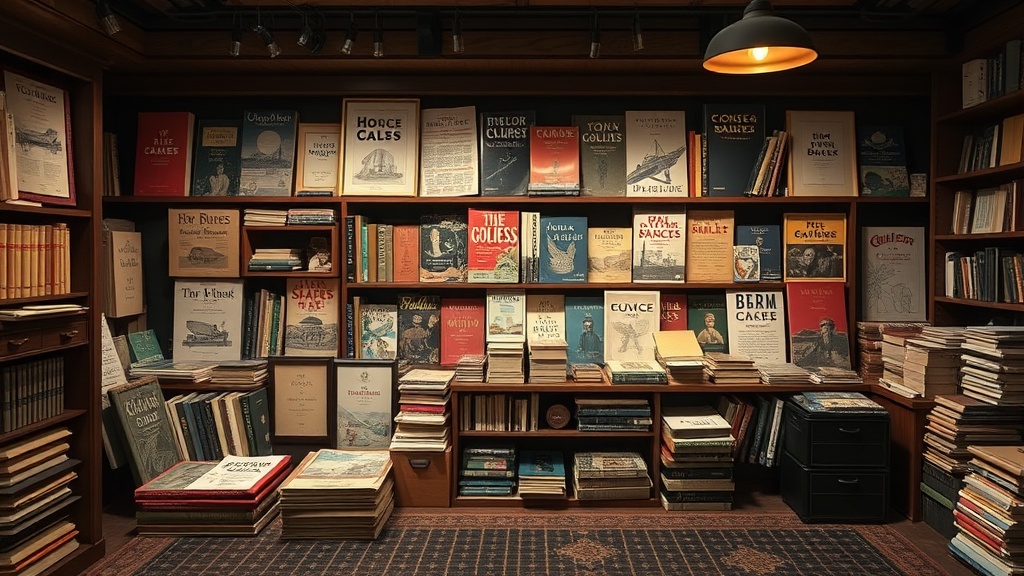
Organizing Your Vintage Catalog Collection by Era and Brand

Imagine opening a storage bin only to find a 1964 Sears catalog crushed under a heavy 1980s Hasbro catalog, with the edges of the paper yellowing and fraying from lack of structure. This is the reality for many paper collectors—the chaos of unorganized ephemera can actually damage the value of your collection. This post explains how to organize your vintage catalog collection by era and brand to protect your investment and make browsing actually enjoyable.
Organizing by era and brand is the most effective way to manage a growing library of paper-based collectibles. It turns a messy pile into a searchable, archival-grade archive. If you don't have a system, you'll spend more time hunting for a specific item than actually enjoying your finds.
How Should I Categorize My Catalog Collection?
Categorizing your collection by era and brand provides a dual-layered approach that protects both the historical context and the physical integrity of the paper. You'll want to separate your items into broad time periods first, then refine them by the manufacturer or the retailer. For example, a 1950s Montgomery Ward catalog belongs in a different physical section than a 1990s Toys "R" Us catalog, even if they are both "toy" catalogs. The paper quality, ink type, and even the adhesive used in these eras are vastly different.
The best way to start is by grouping by decade. The 1950s, 60s, and 70s often use different paper weights and binding styles. A 1955 catalog is a completely different beast than a 1995 catalog. Once you have your decades set, you can sub-categorize by brand or retailer.
Here is a suggested hierarchy for your organization:
- Primary Category: Era/Decade (e.g., 1950s, 1960s, 1970s)
- Secondary Category: Retailer/Brand (e.g., Sears, J.C. Penney, FAO Schwarz)
- Tertiary Category: Product Type (e.g., Seasonal, Holiday-Specific, Annual Catalog)
Using this method ensures you aren't mixing high-quality linen-finish catalogs with cheap, mass-market newsprint. It also helps you track the evolution of a single brand's branding—like how the LEGO catalog changed from simple text-heavy pages to the high-gloss, visual-heavy books we see today.
Why is Organizing by Brand Important?
Organizing by brand allows you to track the specific history of a manufacturer's marketing-to-product evolution. Collectors often focus on one specific brand, like Mattel or Kenner, and having a brand-specific section makes it easy to see how their toy lines expanded over time. It also helps you spot "out of place" items that might belong in a different collection.
Think about the difference between a general department store catalog and a brand-specific catalog. A Sears catalog is a broad snapshot of culture, whereas a specialized catalog from a company like LEGO or Hasbro is a deep dive into a specific ecosystem. If you keep them mixed, you lose the ability to see the niche nuances that make certain brands iconic.
It's worth noting that brand-specific catalogs often have different paper types. A high-end boutique catalog might use heavy cardstock, while a standard mailer might be thin and flimsy. Mixing these can lead to "acid transfer," where the cheaper paper degrades the more expensive one. If you're worried about the physical state of your items, you should check out my previous post on preserving the color of vintage catalog pages.
| Method | Best For | Pros | Cons |
|---|---|---|---|
| Chronological | General History | Shows evolution of time | Can get messy if brands overlap |
| Brand-First | Niche Collectors | Great for deep-diving a company | Harder to find general culture |
| Retailer-First | Department Store Fans | Easy to find by store name | Mixing eras can cause damage |
How Do I Store My Catalogs Safely?
Store your catalogs flat in acid-free boxes or archival-safe sleeves to prevent curling, tearing, and discoloration. Never stack heavy catalogs on top of thin, fragile ones—this is a recipe for a crushed collection. The weight of a 1980s heavy-stock catalog can easily damage a 1940s thin-paper pamphlet if they're just piled in a box.
The environment matters as much as the storage container. If you live in a humid area like Halifax, you'll need to be extra careful. Moisture is the enemy of paper. A damp basement is the absolute worst place for a collection. Even a slight increase in humidity can lead to foxing (those little brown spots on old paper) or mold growth.
Here are a few quick rules for safe storage:
- Avoid Sunlight: UV rays will bleach the ink right off the page. Keep them in a dark room.
- Use Acid-Free Materials: Standard cardboard is acidic and will destroy your catalogs over time. Use archival-grade boxes.
- Vertical vs. Horizontal: For thin pamphlets, vertical storage in a specialized binder is fine. For heavy catalogs, lay them flat.
- Temperature Control: Aim for a stable, cool environment. Fluctuations in temperature cause the paper fibers to expand and contract, which leads to brittleness.
If you've found rare paper ephemera from the 1950s, you'll want to be even more diligent. Those items are often more fragile than the standard catalogs we see from the 1990s. They need specialized care to remain in "collector grade" condition.
When you're looking through your collection, you'll notice that certain eras have certain "signatures." The 1970s catalogs often have a specific color palette—lots of oranges and browns—and a specific paper weight that feels much heavier than the 1990s gloss. Knowing these signatures helps you sort your collection faster. If you pick up a catalog and it feels like a magazine, it's likely later in the century. If it feels like a newspaper, it's likely much older.
One thing to keep in mind: don't over-organize to the point where you can't actually look at your stuff. The goal is a system that works for you, not a system that becomes a second job. If you have a small collection, a simple three-ring binder with clear plastic sleeves might be all you need. If you have hundreds, you'll need the boxes and the tiered system.
The way you treat your catalogs today determines how they look in twenty years. A little bit of planning—deciding whether to sort by the year or by the company—goes a long way. It's the difference between a pile of old paper and a curated library of toy history.
Steps
- 1
Sort by Decade
- 2
Group by Manufacturer
- 3
Create a Cataloging System
- 4
Label Your Storage Bins