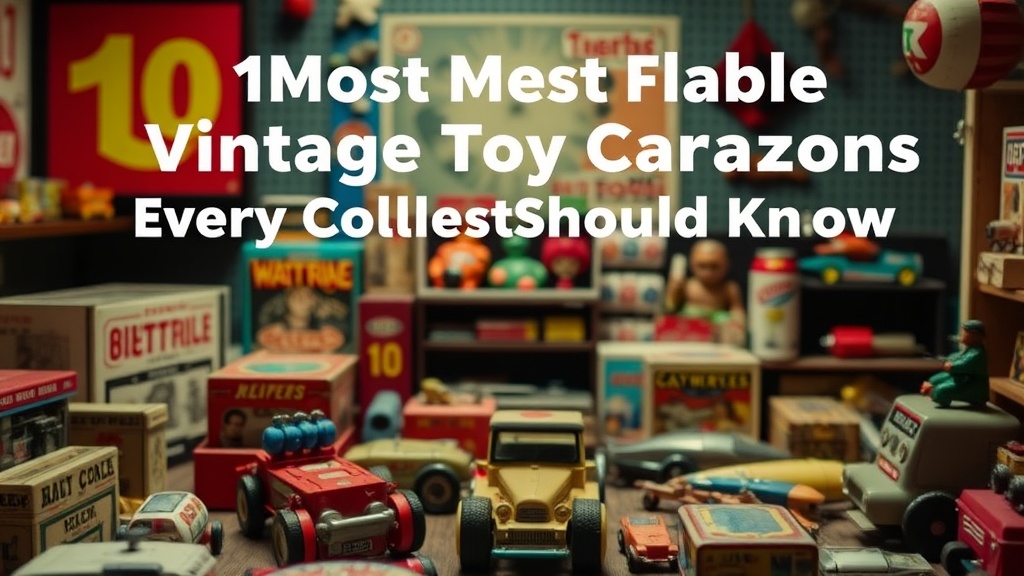
10 Most Valuable Vintage Toy Catalogs Every Collector Should Know

1969 Sears Wishbook with First Astronaut Barbie
1977 Montgomery Ward Star Wars Premiere Edition
1984 JCPenney Masters of the Universe Cover Catalog
1953 Sears Christmas Book with Original Mr. Potato Head
1985 Montgomery Ward Transformers The Movie Feature
Vintage toy catalogs represent one of the most underrated corners of the collectibles market. These paper time capsules don't just list products—they capture entire eras of childhood, document discontinued toy lines, and preserve advertising art that's long since vanished from magazine pages. This post breaks down ten catalogs that consistently command the highest prices at auction, along with what makes each one worth tracking down.
What Makes a Toy Catalog Valuable to Collectors?
Rarity drives the market. Catalogs printed in limited quantities—holiday wish books, dealer-only editions, regional store inserts—tend to appreciate faster than mass-produced publications. Condition matters tremendously: catalogs in near-mint condition with minimal creasing, no writing, and intact covers fetch premiums of 300% or more over worn copies.
Content creates additional value. Catalogs featuring first appearances of iconic toys, prototype images that differ from final products, or exclusive regional variants attract specialist collectors. The 1964 Sears Christmas Wish Book featuring the debut G.I. Joe action figure sells for $800–$1,200 in excellent condition—not because of the paper, but because it documents a pivotal moment in toy history.
Why Are Sears Wish Books So Collectible?
Sears Wish Books dominate the vintage catalog market because they reached nearly every American household for over a century. Between 1933 and 2011, these seasonal catalogs shaped Christmas mornings across North America, creating deep nostalgic connections that drive today's collector demand.
The 1933 inaugural edition stands as the holy grail. Only a handful survive in any condition, and complete copies regularly sell for $3,000–$5,000 at heritage auction houses. The 1959 edition—featuring the first mass-market Barbie doll spread—commands $400–$600. Even 1970s and 1980s editions have climbed in value, with pristine copies from the Star Wars era now trading for $75–$150.
Here's the thing about collecting Wish Books: completeness matters more than age. A 1940s edition missing its toy section drops in value by half. Collectors want the full experience—toys, games, bikes, and that distinctive glossy paper stock that somehow smelled like anticipation.
Which Toy Catalogs Fetch the Highest Prices Today?
These ten publications represent the current peak of the vintage toy catalog market, based on auction records and dealer pricing from the past three years.
1. 1933 Sears Roebuck Christmas Wish Book (First Edition)
The catalog that started it all. Only a few dozen complete copies survive, most housed in museum collections. Private sales have reached $8,000 for pristine examples. This wasn't just a toy catalog—it was a department store revolution, proving that dreams could be packaged and delivered through the mail.
2. 1963 Montgomery Ward Christmas Catalog (First G.I. Joe)
Hasbro's revolutionary action figure appeared here before anywhere else. The full-page spread shows the original four figures—Soldier, Sailor, Marine, and Pilot—in their classic box art. Collector guides list this at $1,500–$2,500 depending on condition. The catch? Most copies were read to pieces by excited boys in 1963. Finding one unread is the challenge.
3. 1977 JCPenney Christmas Book (Star Wars Launch)
The first mass-market catalog featuring Kenner's Star Wars action figures. Early printings show the Early Bird Certificate Package—a promise of figures that hadn't even been manufactured yet. These catalogs document the chaos of the 1977 holiday rush, when demand completely overwhelmed supply. Prices range from $200–$400.
Worth noting: later printings from the same season added actual product photos once Kenner caught up. The certificate-only versions command premiums of 40–50%.
4. 1984 Sears Wish Book (Transformers and Cabbage Patch Kids)
A perfect storm of eighties toy mania. This catalog features the full first-year Transformers lineup alongside Cabbage Patch Kids during their peak scarcity. The juxtaposition makes it historically significant—it captures the moment when boys' and girls' toys both achieved frenzy status. Expect to pay $150–$300 for clean copies.
5. 1959 Sears Wish Book (Barbie Debut)
Mattel's revolutionary fashion doll appears across several pages, including the famous $3.00 basic Barbie and her extensive wardrobe. The catalog photography established the aesthetic that would define Barbie marketing for decades. Prices have climbed steadily, with $400–$600 now standard for collectible condition.
6. 1968 Montgomery Ward Holiday Catalog (Hot Wheels First Edition)
Mattel's Hot Wheels launched in May 1968, and this holiday catalog represents their first Christmas season. The spread shows the original Sweet Sixteen castings in vibrant color photography. Dealership catalogs from this era are rare—most were discarded by automotive salesmen uninterested in toy promotions. $800–$1,200 for complete editions.
7. 1985 JCPenney Christmas Book (Nintendo Entertainment System)
The NES launched in North America in October 1985, making this catalog one of the first documents of its retail availability. The spread shows Super Mario Bros., Duck Hunt, and the infamous Zapper light gun. Gaming historians prize these early NES advertisements. Current market: $125–$250.
8. 1972 Sears Wish Book (Mego World's Greatest Super Heroes)
Mego's revolutionary 8-inch superhero figures changed the action figure market, and this catalog shows the complete first wave: Batman, Robin, Superman, Aquaman, and Spider-Man. The photography is gorgeous—full-color studio shots that made these cloth-costumed figures look like premium collectibles. $300–$500 for clean copies.
9. 1961 Sears Christmas Book (Ken Doll Debut)
Barbie's boyfriend arrived this year, and the catalog documents his original flocked hair and extensive wardrobe. Ken's debut receives less attention than Barbie's, making this catalog relatively undervalued—$250–$400 currently, though prices have been climbing as Barbie collecting expands beyond the doll herself.
10. 1996 Sears Wish Book (Tamagotchi and Tickle Me Elmo)
The last great holiday catalog frenzy. Tamagotchi virtual pets and Tickle Me Elmo created shopping riots that year. This catalog captures both phenomena in their original marketing context. As the final Sears Wish Book era before digital shopping transformed retail, it carries historical weight beyond its contents. $75–$150 currently, but rising fast as nineties nostalgia intensifies.
How Do You Spot a Catalog Worth Keeping?
Not every old catalog deserves preservation. Here's what separates the valuable from the recyclable:
| Feature | High Value | Low Value |
|---|---|---|
| Condition | Crisp pages, no tears, minimal spine wear | Water damage, missing pages, heavy creasing |
| Content | First appearances of iconic toys, regional exclusives | Generic merchandise, post-2000 editions |
| Rarity | Limited print runs, dealer-only distributions | Mass-produced consumer catalogs from major retailers |
| Completeness | All pages intact, including order forms and inserts | Missing toy sections, clipped coupons, removed pages |
That said, personal value matters too. The catalog from your own childhood Christmas—regardless of market price—carries meaning no auction house can measure.
Storage Tips for Paper Preservation
Archival-quality polyester sleeves (Mylar D) prevent the yellowing and brittleness that destroys paper over decades. Store catalogs flat, never rolled, in cool, dry environments away from direct light. Acid-free boxes provide additional protection against environmental damage.
For high-value acquisitions—anything over $500—consider professional grading and encapsulation. CGC offers paper grading services that authenticate condition and provide tamper-evident cases. The service costs $50–$100 per catalog, but the protection and resale value often justify the investment.
Where Can You Find Vintage Toy Catalogs?
eBay remains the primary marketplace, with 200–300 toy catalogs listed weekly. Search terms matter: "vintage toy catalog," "Christmas wish book," and specific years yield different results. Auction houses like Heritage Auctions handle the truly rare pieces—expect buyer's premiums of 20–25% on top of hammer prices.
Estate sales in older neighborhoods sometimes yield unexpected treasures. Retired teachers, former retail workers, and elderly collectors often preserved catalogs that families discarded. The best finds come from homes where children outgrew toys but parents couldn't bear throwing away the wish books that once shaped their holiday dreams.
Collector communities provide leads too. The Toy Collector Society maintains forums where members trade catalogs and share authentication tips. Facebook groups dedicated to vintage toy documentation often feature catalog exchanges—though you'll need to verify seller reputation carefully.
Authentication Red Flags
Reproductions plague the high-end catalog market. Modern digital printing can replicate aged paper surprisingly well. Check for:
- Paper stock: Vintage catalogs use specific paper weights and finishes that feel different from modern复印.
- Printing dots: Under magnification, vintage halftone printing shows distinct dot patterns. Modern digital prints use stochastic screening that looks different.
- Binding: Saddle-stitch binding from the 1960s–1980s used specific wire gauges and spacing.
- Smell: Genuine vintage paper has a distinct musty-sweet odor that reproductions lack.
When in doubt, consult specialist dealers who've handled hundreds of authentic examples. The investment in expert opinion protects against costly mistakes.
Building a Collection Strategy
Start with your birth year. A personal connection to the catalog's era provides motivation through the inevitable dry spells. From there, expand chronologically—backward to understand toy history, forward to document evolving marketing techniques.
Focus on completeness over quantity. Ten pristine catalogs display better than fifty damaged ones. And document everything: photograph your collection, record purchase prices, maintain provenance records. Good catalog collections become family heirlooms—stories told through paper and ink about the toys that shaped generations.